Cute Little Farm Watercolor Clipart Review
As a professional embroidery designer and product reviewer, I approach every new asset with a critical eye. When evaluating Cute Little Farm Watercolor Clipart, my first thought isn't just about how pretty the illustration looks on a screen, but how it will translate into stitches on fabric. For those of us running a craft business or managing an Etsy shop, the gap between digital art and a tangible handmade product is where profit and reputation live or die. This collection of farm-themed illustrations carries a distinct nostalgic warmth, featuring soft edges and pastoral motifs that immediately suggest nursery decor, vintage-style apparel, and personalized gifts. However, moving from watercolor pixels to a machine embroidery design requires careful consideration of density, texture, and application.
Translating Soft Aesthetics to Stitch Reality
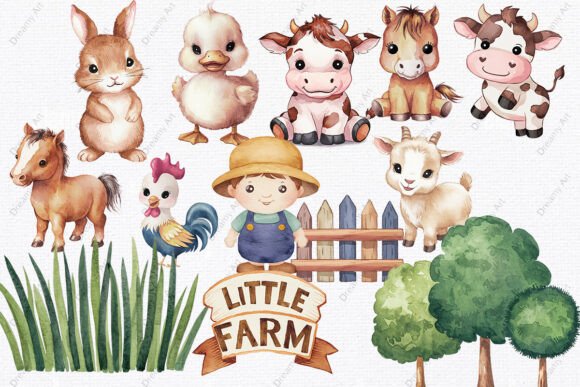
The visual personality of this clipart set is undeniably charming. The watercolor style relies on gradients, bleeding edges, and subtle color variations that are inherently difficult for embroidery machines to replicate directly. Unlike vector art with hard lines, these illustrations demand a digitizing strategy that prioritizes interpretation over exact replication. When I look at these assets, I see potential for beautiful applique designs where the fabric itself provides the base color, or complex fill stitch patterns that mimic the painterly effect through thread blending.
For an Etsy seller or boutique owner, this aesthetic is gold. Customers associate watercolor farm themes with high-value, artisanal quality. It signals "custom" rather than "mass-produced." However, as a reviewer, I must caution that simply auto-digitizing these images will likely result in muddy, dense patches that pucker lightweight fabrics. To make Cute Little Farm Watercolor Clipart work as a commercial embroidery asset, you must treat it as a reference for creating optimized stitch files. The mood is perfect for spring collections, baby showers, and farmhouse kitchenware, but the execution requires technical discipline to maintain that airy, artistic feel without compromising garment integrity.
Real-World Application: The Custom Tote Bag Test
To truly evaluate this collection, I mentally walked through a recent client project: a custom canvas tote bag for a local farmers' market vendor. The client wanted a rooster and wheat stalk motif from this clipart set centered on a natural cotton tote. This scenario highlights both the strengths and challenges of using watercolor illustrations in commercial embroidery.
Canvas is a forgiving fabric, which helps. However, the watercolor shading in the original art suggested a need for extensive color blending. In practice, I would recommend simplifying the design into distinct color blocks separated by running stitch outlines or negative space. Trying to stitch every gradient shade would create a bulletproof patch of thread that distorts the bag's drape. Instead, using the clipart as a guide for a stylized, flat-color interpretation preserved the farm aesthetic while ensuring the tote bag design remained functional and durable. The result was a product that looked intentionally designed for embroidery, rather than a forced print-to-stitch conversion. This distinction is what builds customer trust and encourages repeat business for small shop products.
Ideal Use Cases for Farmhouse Embroidery Assets
Based on the composition and thematic elements of Cute Little Farm Watercolor Clipart, certain applications naturally outperform others. These illustrations shine brightest when used in projects that embrace their inherent softness:
- Baby Embroidery: Onesies, bibs, and nursery blankets benefit from the gentle color palette. Use lighter stitch density to keep garments soft against sensitive skin.
- Kitchen Textiles: Tea towels and aprons are ideal canvases. The linen or cotton textures complement the rustic farm theme perfectly.
- Sweatshirt Embroidery: Left-chest placements on cream or sage green sweatshirts create trendy, high-margin boutique items. Keep the design size moderate to avoid heavy center-of-chest stiffness.
- Holiday Embroidery: These assets transition easily into Thanksgiving or Easter merchandise. A simple bunny or pumpkin motif can be adapted for seasonal personalized gifts.
- Digital Product Previews: Even if you aren't stitching immediately, these illustrations serve as excellent backgrounds for printable mockups to test market interest before investing digitizing time.
Navigating Technical Limitations and Fabric Choices
While versatile, Cute Little Farm Watercolor Clipart has boundaries. As an experienced designer, I advise extreme caution when applying these designs to performance wear, stretchy knits, or dark fabrics. Watercolor aesthetics rely on light showing through color; on black fabric, you lose the luminosity unless you stitch a white underlay base, which adds significant density and stiffness.
Small hoop sizes also present a challenge. Intricate farm details like individual feathers or wheat kernels can become indistinguishable blobs when scaled down below three inches. If your target product is a cap or a small pocket logo, you must simplify the artwork drastically. Curved surfaces like hats further complicate matters, as the distortion inherent in cap framing fights against the organic, flowing lines typical of watercolor art. Always verify that your chosen embroidery file has been tested specifically for the surface you intend to use. Never assume a flat-design file will wrap correctly around a curved brim without modification.
Designer Notes for Professional Results
Before listing any finished product derived from this collection, run through this practical checklist. Your reputation depends on the quality of the final stitch-out, not just the beauty of the source art.
- Test on Scrap Fabric First: Never stitch a new design directly onto a sellable item. Use a scrap of the exact material and stabilizer combination you plan to use for production.
- Check Thread Color Contrast: Watercolor palettes often include low-contrast pastels. Ensure your thread colors have enough differentiation to be visible after stitching. What looks distinct on a monitor may blend together in rayon or polyester thread.
- Review Stitch Density: Open the digital embroidery file in your software. Look for areas exceeding 0.4mm density. Reduce fill stitches or convert heavy sections to applique to prevent fabric damage.
- Confirm Licensing Terms: Verify whether the license covers only personal use or extends to commercial embroidery. Some illustration licenses prohibit selling digitized files but allow selling physical embroidered goods. Know your rights before opening your shop.
- Mockup in Black and White: Strip the color from your digital preview. If the design reads clearly in grayscale, it will stitch well. If it turns into a muddy mess, you need more contrast or outline definition.
- Validate Hoop Size Compatibility: Ensure the design fits comfortably within your machine’s maximum sewing field with adequate margin for hoop grip. Crowding the hoop edges leads to registration errors.
Elevating Brand Value Through Thoughtful Adaptation
Ultimately, Cute Little Farm Watercolor Clipart offers tremendous potential for makers and entrepreneurs who respect the translation process. It is not a plug-and-play solution for instant profit, but rather a foundational asset for building a cohesive, emotionally resonant brand identity. When adapted correctly, these illustrations communicate care, tradition, and artistry—qualities that justify premium pricing in the handmade marketplace.
Whether you are creating a signature line of nursery bedding or expanding your catalog of seasonal custom apparel, let the watercolor aesthetic guide your creative decisions without dictating poor technical outcomes. By balancing artistic vision with embroidery best practices, you transform simple digital illustrations into cherished, tangible heirlooms. Always remember that in our industry, the most successful designs are those where the customer sees only the beauty, never the struggle of the stitching. Take the time to refine, test, and perfect your adaptation of these farm themes, and your finished products will reflect the professionalism and dedication that define true craftsmanship.