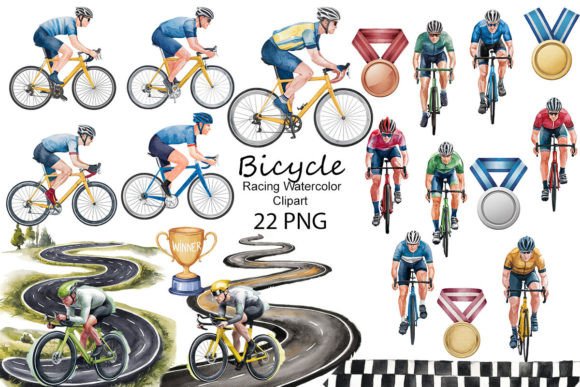
Bicycle Racing Watercolor Clipart for Embroidery
As a designer who spends more time behind an embroidery machine than a computer screen, I approach digital assets with a healthy dose of skepticism. When I first opened the Bicycle Racing Watercolor Clipart files, I wasn't looking for pretty pixels; I was looking for stitchability. For those of us running a craft business or managing an Etsy shop, the gap between a beautiful illustration and a viable machine embroidery design is often where profit margins disappear. After reviewing this collection through the lens of real-world production, I see significant potential for specific applications, provided you understand how to translate watercolor aesthetics into thread.
First Impressions: Motion, Mood, and Stitch Translation
The immediate strength of this Bicycle Racing Watercolor Clipart lies in its sense of movement. Unlike static vector art, these illustrations capture the blur and energy of cycling. Visually, they evoke nostalgia and athleticism simultaneously, making them ideal for custom apparel targeting cycling clubs, vintage enthusiasts, or active lifestyle brands. However, as an embroiderer, my first thought was density. Watercolor effects rely on color blending and transparency, which are notoriously difficult to replicate with thread without creating a bulletproof patch of stitches.
In evaluating these Illustrations, I looked for clear separation between foreground elements (the bike, the rider) and background washes. The best files in this set offer distinct layers that can be converted into a combination of fill stitch and running stitch. If you attempt to digitize the entire image as a solid block, you will lose the delicate watercolor feel. Instead, this artwork demands a strategic approach where negative space does some of the heavy lifting, allowing the fabric texture to contribute to the final visual effect.
Real-World Application: The Custom Tote Bag Test
To truly judge this asset, I mentally walked through a recent client request: a series of canvas tote bags for a local charity bike ride. This is a classic tote bag design scenario where durability meets aesthetics. Canvas is forgiving, but it has a coarse weave that can swallow fine details. Using the Bicycle Racing Watercolor Clipart here requires simplification.
For this project, I would isolate the bicycle frame and wheels from the watercolor background. The mechanical parts of the bike translate beautifully into crisp satin stitch outlines, providing structure. The watercolor splashes surrounding the bike should be digitized using low-density fill stitches or even thread painting techniques to mimic the paint's fluidity without over-saturating the canvas. This balance ensures the finished product remains pliable rather than stiff. Customers at craft fairs pick up items to feel the quality; if your sweatshirt embroidery or tote feels like cardboard because of excessive stitch density, they will put it back. This clipart set supports that necessary balance if you resist the urge to stitch every pixel.
Navigating Fabric Limitations and Hoop Constraints
While versatile, this artwork is not universally applicable. You must exercise caution when applying Bicycle Racing Watercolor Clipart to stretchy or textured fabrics. On performance wear or lightweight knits, the complex shading typical of watercolor styles can cause puckering if the stabilizer choice isn't perfect. I recommend testing on scrap fabric identical to your final garment before committing to a full production run.
Furthermore, consider your hoop size limitations. Watercolor designs often rely on expansive, soft edges that fade out. If you are forced to shrink the design to fit a 4x4 hoop for a baby onesie or cap, those subtle gradients may turn into muddy blobs of thread. This clipart shines brightest at medium to large sizes where the thread colors have room to blend visually. For smaller applications like baby embroidery or left-chest logos, look for the simpler variations within the set or crop tightly to focus on a single, bold element rather than the full scene.
Dark fabrics also present a challenge. Watercolor implies light passing through pigment. On black or navy garments, you will need to lay down a white underlay base to make the colors pop, which adds significant stitch count. Always check whether the added bulk aligns with the garment's intended use. A heavy design on a thin summer t-shirt will distort the neckline and drape poorly.
Elevating Product Value and Brand Consistency
Using high-quality source material like this directly impacts customer trust. In the saturated market of Etsy seller listings and small shop product catalogs, generic clipart stands out for the wrong reasons. The artistic integrity of this Bicycle Racing Watercolor Clipart signals professionalism. When a buyer sees a well-executed interpretation of this art on a personalized gift or boutique item, they perceive higher value because the design doesn't look like a stock vector pasted onto a shirt.
This visual appeal extends to your marketing materials. Before you even stitch a sample, use these files to create accurate printable mockup previews. Because the art style is cohesive, you can build a consistent brand identity across digital embroidery file listings and physical merchandise. Whether you are selling the embroidered patch itself or the digitized file to other makers, maintaining the original watercolor aesthetic in both digital and physical forms creates recognition. Buyers engage more readily when they can clearly visualize how the digital art translates to the tangible handmade product.
Critical Notes for the Working Embroiderer
Before you load this embroidery file into your machine, run through this practical checklist derived from years of production experience:
- Verify Licensing: Confirm specifically whether your purchase allows for commercial use on finished goods versus selling the digital files themselves. Terms vary, and protecting your business starts here.
- Test Contrast: Print the design in grayscale. If the image looks flat in black and white, your stitching will lack definition. Adjust contrast in your digitizing software before stitching.
- Check Stitch Density: Watercolor areas should be significantly less dense than outline work. Aim for coverage that allows fabric grain to show through slightly for authenticity.
- Stabilizer Strategy: Match your backing to the fabric weight, not just the design size. Complex watercolor blends often require cutaway stabilizer even on stable fabrics to prevent registration shifts between color layers.
- Mockup Validation: Create both light and dark background mockups to ensure versatility. What works on a white tea towel may fail on a charcoal hoodie.
- Detail Inspection: Zoom in to 100% on screen. Any detail smaller than 1mm in the artwork will likely be lost or cause thread breaks during stitching. Simplify ruthlessly.
Ultimately, Bicycle Racing Watercolor Clipart is a valuable asset for the thoughtful maker. It bridges the gap between fine art illustration and functional textile design. By respecting the technical constraints of embroidery while leveraging the emotional resonance of the artwork, you can create commercial embroidery projects and holiday embroidery gifts that stand apart. Treat the digitizing process as an act of translation, not just conversion, and your results will reflect the care and expertise that define true craftsmanship.